


Unlocking the mysteries of heart failure
Heart failure sounds like a death sentence. A generation ago, it often was. But Dr. Peter Liu sees a future where we can eliminate this devastating condition.
Dr. Peter Liu remembers a grandmother who arrived in the emergency department more than 20 years ago. She was gasping for air as fluid filled her lungs.
She told the medical team she was growing more tired all the time; she couldn’t keep up with her granddaughter on the walk to school. She thought it was because she was getting older. Dr. Liu and his colleagues found the real cause: heart failure.
“Fortunately, we were able to get her better, by getting rid of the fluid in her lungs,” he recalls. “But we really didn’t understand this condition, and we didn’t have much treatment to offer back then.”
Less than two weeks later, the woman was back in emergency. “Unfortunately, this time, we couldn’t get the fluid out in time. She went to the ICU and did not survive,” says Dr. Liu.
people in Canada are touched by heart failure.
That patient stayed in Dr. Liu’s mind over the decades, inspiring his work as a cardiologist and Heart & Stroke researcher. Now chair and scientific director of the Brain and Heart Initiative at the University of Ottawa Heart Institute, he has received prestigious awards for his research into heart failure.
Heart failure touches 1 in 3 people in Canada, either because they have it themselves or because it affects a family member or close friend. Dr. Liu talked to Heart & Stroke about this devastating condition, the breakthroughs that are saving and prolonging lives — and how close we might be to wiping out heart failure altogether.
What is heart failure?
Heart failure is the most common chronic heart condition. It occurs when the heart struggles to pump enough blood and deliver oxygen to vital organs.
Symptoms include shortness of breath, extreme tiredness, persistent cough, bloating, sudden weight gain, and swelling of the ankles, feet and legs. It can become a real challenge from day to day for people living with the condition.
What did it mean to get a diagnosis of heart failure 25 years ago?
Back then, a diagnosis of heart failure meant a mortality rate of 50% within five years. So, half the people diagnosed with heart failure would die within that time frame. When someone came in with advanced heart failure, we’d tell them, “We’ll try to do our best, but make sure you get your affairs in order.”
What made it so deadly?
Heart failure, for the longest time, had very few treatments. And people didn’t know the cause. It was thought to be a “pump problem” — meaning the heart was weak and couldn’t pump enough blood. A lot of effort was spent trying to strengthen the pump. Most of those solutions failed.
What changed?
For many patients, including the grandmother I talked about, when we actually looked at the heart, we were surprised to find that the heart was still able to pump adequately. There’s a number we call the ejection fraction — that’s how much blood the heart pumps out with each beat. A normal ejection fraction is over 50%, meaning the heart pumps out more than half the expected blood volume with each heartbeat. The old-style thinking was that you can have heart failure only when the ejection fraction is very low — that is when the pump is weak.
In this patient and others, the ejection fraction was actually 50% or higher. Yet they were coming in with shortness of breath and fluid overload. Their organs weren’t getting enough blood or oxygen — which is heart failure. So, we were dealing with an entirely new cause of heart failure, and very little was known about it.
Trying to solve this mystery, we looked at the data on every case of heart failure in Ontario. It turned out that more than half of the patients actually had so-called normal ejection fraction.
We realized that the problem was not the strength of the heart-pumping function in these patients, but rather that the heart could not relax and fill with blood, to distribute to the rest of the body. The heart is like a balloon; it needs to fill up before it can pump. But in these cases, the heart is stiff, so it can’t fill adequately. With the heart not filling properly, the so-called normal ejection fraction is ultimately pumping less blood out of the heart with each heartbeat.
We identified this form of heart failure as heart failure with preserved ejection fraction (HFpEF). It’s kind of a mouthful! But it launched an entirely new field of research.
What did this discovery mean?
For these patients, it meant no longer getting bounced between their family doctor, a lung doctor, a geriatric specialist… thinking maybe it was a lung problem, part of getting old or all in their head.
For researchers, it meant we could try to understand the problem and find solutions — do the clinical trials and find treatments.
What solutions have you found?
We learned a lot of these patients have high blood pressure or diabetes; they are older and more often women. So, it turns out you need to treat not just the heart, but the entire body system. This is now the principle behind all heart failure treatment.
One treatment is SGLT2 inhibitors — short for sodium glucose transporter inhibitors. These medications were originally used for diabetes, but it turned out that patients who don’t have diabetes can also derive benefits from them for heart failure. Other treatments include agents to block the hormone aldosterone. These medications protect the whole-body system from harmful chemicals.
It has been a long journey to get this far: Dr. Malcolm Arnold and I led the development of the first heart failure guidelines, in Canada, in 2006. The newest guidelines, recommending heart and brain treatments, just came out in 2025 and 2026.
What is the outlook today for someone diagnosed with heart failure of any type?
In some recent heart failure trials, the mortality rate for three to five years is between 3% and 5%. Now, I see heart failure patients who I first saw 20 years ago, who are doing well. And when I see a new patient, we no longer talk about the dire outcome. We say, “Let’s find out the causes of your heart failure, and let’s see if we can turn the clock back, and give you back your heart function.”
What is behind this amazing improvement?
One aspect is proper recognition — making the right diagnosis. The second is understanding the underlying disease process and contributing factors, including high blood pressure, diabetes and obesity. Addressing those becomes an essential part of the treatment. Third, we have the newer medicines that address the disease process.
Finally, there is what we call the partnership with the patient. We make sure the patient knows the importance of watching out for salt, for fluids. We encourage them to have an active lifestyle, rather than being confined to a chair or bed. We engage the whole family and ensure the patient can benefit from customized medical treatment.
I often say to my heart failure patients, “We’re going to work together as a team, and you are going to be your own best doctor. I’m just here to give you the plan.”
The main thing is we now have hope rather than despair.
See Dr. Peter Liu’s reaction to meeting the people his breakthrough touched.
What makes you optimistic about advances on the horizon?
We now have amazing new tools. We have identified regulators that the heart uses to talk to other organs. When these regulators go awry, the heart doesn’t work properly, the kidneys don’t work properly, the brain doesn’t work properly.
Now we can measure these new regulators and use the information to predict which person is going to develop heart failure. Then you can take customized preventative measures. We aim to reverse the risk factors, so patients can have healthy and enjoyable lives and avoid the tragedies of heart failure.
How close are we to being able to prevent heart failure?
Currently, we’re doing clinical trials to identify protective tools that could actually prevent heart failure. We are making major progress. But the journey is long. It will take more research to show we can do it — and how to do it well.
How has the support of Heart & Stroke donors helped your research?
Heart & Stroke has been foundational to my own research. My first summer research award was supported by Heart & Stroke. That’s what got me interested in heart problems. And my first research grant was from Heart & Stroke, after I came back to Canada to launch my own research program.
Heart & Stroke recognizes the importance of supporting talented people with the passion and focus for research and supporting ideas that can spark the solution to a major problem. I owe tremendous gratitude to the generous donors. Each one is truly a team member in our journeys of discovery, ultimately helping us make a difference in heart and stroke for every Canadian.
The future is even more important than the past. Thanks to Heart & Stroke donors, there is a brighter future ahead for all of us. Together we will realize our collective dream of a healthier tomorrow, and thus a stronger Canada.

Real stories, real impact


Here for every milestone
Research ensured Katie could be there for hockey games, swim meets, dance competitions and everyday adventures.

I don't want to die
Heart failure changed Wayne’s life, but research gave him more time and a new purpose.
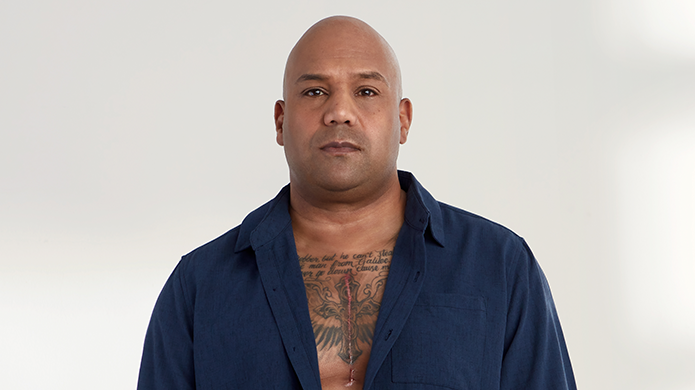
Facing a future with heart failure
The diagnosis knocked Kevin down. But after open-heart surgery, he’s back on his feet