


Here for every milestone
Research ensured Katie could be there for hockey games, swim meets, dance competitions and everyday adventures.
Every day at sunrise Katie Shea heads out for a 10-km walk. It’s a chance to reflect on the life she’s built. “I find it very peaceful,” Katie says. “I love my walks.” And she doesn’t take this quiet ritual for granted.
Eight years ago, Katie wasn’t sure what the future would hold.

Katie Shea with her daughter outside enjoying nature.

Katie is grateful for everyday moments with her children.

Katie giving her daughter a piggyback ride.
A life-changing diagnosis
In 2018, at age 41, Katie was raising her three children, then aged five, three and one, and often felt unwell and overwhelmed with fatigue. “I remember wondering if it’s meant to be this exhausting to have children.” Katie says. “Eventually I knew something wasn’t right.”
While out walking with them one day, she felt like she had a bad case of the flu. Katie went to her doctor, who immediately ordered tests.
The results were terrifying: Katie had dilated cardiomyopathy. The condition weakens and enlarges the heart muscle, reducing its ability to pump blood effectively, and can lead to heart failure. It runs in Katie’s family — her father, brother, sister and several aunts, uncles and cousins live with it too.
“When my cardiologist came in, she was very serious,” Katie says. “I was more in a state of shock.” Her thoughts immediately turned to her young family.
“At that moment, you can’t reconcile in your brain what all of those moving pieces will look like with three young children at home,” she says. “It was sort of the end of the old me that I knew and the beginning of a new me that I didn't know.”
Finding her footing
For Katie, the months that followed were among the hardest of her life. Her heart function was declining rapidly, and in early 2019 she was fast-tracked to receive an implanted defibrillator. Doctors spent seven months gradually increasing her medication to the target dose. As her body adjusted to the medication, Katie had to deal with extremely low blood pressure and constantly feeling wiped out. “It was pretty challenging getting there. Some days were a little rough,” she says.
But reaching that target dose felt like a significant milestone. Another came after her defibrillator surgery. She was told not to lift her children for six weeks so her body could heal.
“I remember that six-week mark,” she says. “Finally, I was able to pick up my one-year-old, my three-year-old and my five-year-old. We’d crossed another hurdle.”
With treatment and support from her healthcare team, Katie gradually regained her strength. In 2021, she returned to her corporate career part-time.
The experience changed her perspective. “You really begin to see life in a different light,” Katie says. “You appreciate the smaller things.”
More time for what matters most
Life since her diagnosis looks different than before — these days she’s juggling medical appointments, her children’s busy schedules and time for rest. However, above all it’s full of joy.
Family time revolves around dance competitions, hockey tournaments, swim meets and everyday adventures. “There’s been a lot of magic in the small moments,” she says. “My kids have seen that although there are challenges in life, you can rise above them with grace and gratitude.”
Katie participates in multiple research studies. As someone living with heart failure, she understands firsthand why this work matters. “The research that’s been done, even in the short period since I was diagnosed, is groundbreaking,” Katie says. “The prognosis for people with my condition has extended greatly.”
Recently, as part of a surprise arranged by Heart & Stroke, she and her children had the chance to meet heart failure researcher Dr. Peter Liu and thank him in person for his groundbreaking work.
“It was so incredible to meet someone like Dr. Liu face to face,” Katie says. “His work has had an impact on so many people.” For Katie, above all, it means being there for her children — “the gift of more time.”
Her 13-year-old son, Linden, sees it that way, too.
“I’m just very happy that I’ll get more of it,” he says. “Any time that I get to spend with her is time well spent.”

Real stories, real impact


Today, I live
At 84, Carmelo is once again making plans for the future but just a few years ago a heart failure diagnosis threatened the future he’d worked so hard to have.

I don't want to die
Heart failure changed Wayne’s life, but research gave him more time and a new purpose.
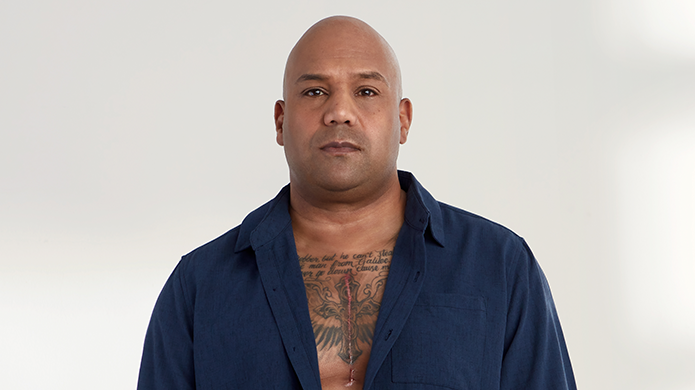
Facing a future with heart failure
The diagnosis knocked Kevin down. But after open-heart surgery, he’s back on his feet