


High blood cholesterol is one of the major controllable risk factors for coronary heart disease, heart attack and stroke. Often there are no symptoms, so many people don’t know if their cholesterol is high until they’re tested.
What is blood cholesterol?
Blood cholesterol is a fat-like substance that circulates in your blood. Your body needs cholesterol to build cells and produce hormones and vitamin D. Most of the cholesterol your body needs is made by your liver.
Cholesterol travels through the blood inside particles called lipoproteins. The two main types of cholesterol are low-density lipoprotein (LDL) cholesterol and high-density lipoprotein (HDL) cholesterol.
LDL cholesterol
- LDL cholesterol is often called ‘bad’ cholesterol. High levels of LDL cholesterol can contribute to the buildup of fatty deposits (plaque) in artery walls. Over time, this can narrow arteries and reduce blood flow to the heart and brain.
HDL cholesterol
- HDL cholesterol is often called ‘good’ cholesterol. It helps carry excess cholesterol from the bloodstream back to the liver, where it can be removed from the body.
Your blood also contains other types of fats, including triglycerides.
- When triglyceride levels are too high, they can increase your risk of heart disease and stroke.
Although your liver naturally makes the cholesterol your body needs, cholesterol levels can sometimes become too high. Many factors can affect cholesterol levels, including genetics, certain health conditions and the food you eat.
Dietary cholesterol — found in meat, poultry, eggs and regular dairy products — has less impact on blood cholesterol than foods with saturated and trans fat.
Saturated fats can be found in:
- highly processed foods
- fatty meats
- full-fat milk products
- butter.
Trans fats can be found in some commercially baked and fried foods. Small amounts also occur naturally in foods such as dairy products, beef and lamb. Trans fats are now less common in Canada because partially hydrogenated oils, the primary source of industrial trans fats, can no longer be added to foods sold in Canada.
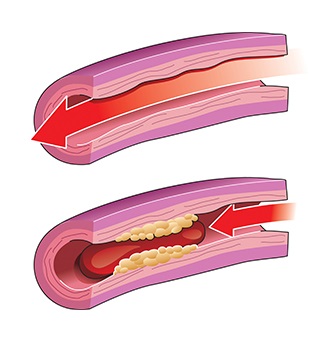
Normal blood flow through healthy artery (top) and blocked blood flow in artery with yellow plaque and red blood clot (bottom).
Diagnosis
Understand your cholesterol risk
The only way to know if you have high cholesterol levels is to have a simple blood test.
Talk to your healthcare provider about cholesterol testing, even if you feel healthy. Testing may be recommended if you are:
- 40 or older
- younger than 40 and have one or more risk factors, such as:
- high blood pressure (hypertension)
- diabetes
- hardening of the arteries (atherosclerosis)
- kidney disease
- a hypertension disorder during pregnancy
- smoking
- a family history of heart disease, stroke or high cholesterol
- South Asian or Indigenous heritage
- chronic obstructive pulmonary disease (COPD)
- an inflammatory disease (e.g., rheumatoid arthritis)
- HIV infection
- erectile dysfunction.
Understand your cholesterol test results
Your blood test results show different types of cholesterol and fats in your blood. Each one gives clues about your heart health. Your results may include:
- HDL cholesterol: It’s good to have a high number.
- LDL cholesterol: It’s good to have a low number.
- Non-HDL cholesterol: This includes all cholesterol types that can contribute to plaque buildup. It’s good to have a low number.
- Triglycerides: High levels combined with high LDL and low HDL may increase your risk for heart disease and stroke. It’s good to have a low number.
- Lipoprotein(a) [Lp(a)]: A cholesterol-carrying particle in your blood that is largely determined by your genes and remains relatively stable throughout your life. High levels may increase your risk of heart disease and stroke, even if your other cholesterol levels are in a healthy range. It’s good to have a low number.
Your healthcare provider will review your test results, along with your risk factors, medical history and current health, to guide next steps.
Familial hypercholesterolemia or inherited high cholesterol
Familial hypercholesterolemia is an inherited condition that causes very high LDL cholesterol levels. If you have familial or inherited high cholesterol levels, you have a much higher risk of developing heart disease early in life.
If you or a close family member have a history of premature heart disease or very high cholesterol at a young age, talk to your healthcare provider about whether genetic testing is right for you. If you or a family member is diagnosed with familial hypercholesterolemia, it’s very important to be treated early. Early diagnosis and treatment can help lower LDL cholesterol levels and reduce the risk of future heart disease and stroke.

Dr. Heit thinks our immune system could hold the key to preventing heart attacks.
Prevention and management
Making healthy lifestyle changes can help control your blood cholesterol levels.
Heart & Stroke recommends that you:
1. Make healthier food choices
-
Choose whole and minimally processed foods at every meal and snack.
- These foods look close to their natural form or have few ingredients.
- Fill half your plate with fruit and vegetables at every meal.
- Choose fresh, frozen or canned fruit and vegetables without added sugar or salt.
- Choose whole grains and fibre more often.
- Look for whole grain breads, barley, oats (including oatmeal), quinoa, brown rice, bulgur, farro and other high-fibre foods.
- Mix up your protein choices.
- Choose plant-based options such as beans, lentils, tofu and nuts more often.
- When eating meat, watch your portion sizes and go for lean cuts and poultry without the skin. Include fish a couple of times a week.
- Choose healthier fats more often.
- Choose foods with unsaturated fats (including monounsaturated and polyunsaturated fats) such as fatty fish, nuts, seeds, avocado, tofu and oils like olive or canola oil.
- Limit foods high in saturated fat, such as fatty meats, full-fat dairy products, butter, coconut oil and highly processed foods.
- When reading nutrition labels, choose products that are lower in saturated fat and sodium. Use the % Daily Value (%DV) on the Nutrition Facts table to compare products — 5% or less is low and 15% or more is high.
- Choose foods with added plant sterols.
- Research shows that plant sterols can help lower LDL cholesterol levels. Current guidelines recommend consuming 2 g of plant sterols or stanols daily. Some fortified foods, such as certain margarines, mayonnaise and salad dressings, can help you meet this target.
- Choose lower-fat dairy products or alternatives with no added sugar.
- Select 1% or skim milk, plain yogurt and lower-fat cheeses.
- Plan smart snacks.
- Pair two different food groups, by choosing snacks such as hummus and carrots, apple slices and low-fat cheese or plain yogurt with berries.
- Drink water and avoid sugary drinks.
- This includes limiting soft drinks, sports drinks, sweetened milk or alternatives, fruit drinks, 100% fruit juice and ready-to-drink sweetened coffees and teas.
Note: Depending on your health needs and cholesterol levels, your healthcare provider may also recommend limiting foods high in dietary cholesterol, such as egg yolks, organ meats and full-fat dairy products.
2. Cook and eat more meals at home
- Cooking at home can help you choose whole and minimally processed foods.
- Explore our healthy recipes and find a few favourites to make regularly.
- Reduce the amount of sugar, salt and saturated fats used in your favourite recipes.
- When eating out, choose meals made with whole and minimally processed foods and look for nutrition information when available.
3. Achieve and maintain a healthy weight for your body
Maintaining a healthy weight can support better cholesterol levels. Carrying extra weight may raise LDL, lower HDL and increase triglycerides. Making small, sustainable changes to your eating habits can have a positive impact on your health.4. Maintain physical activity
Being physically active can help improve your HDL cholesterol levels and support your heart health. Aim for 150 minutes of moderate-to-vigorous physical activity per week. Choose activities you like, such as walking, cycling, swimming or gardening, to help you stay active.
5. Be smoke-free
Quitting smoking is one of the best things you can do for your heart health. Smoking is a risk factor for heart disease and lowers your HDL cholesterol.
Medication to lower cholesterol
Sometimes healthy lifestyle habits are not enough to lower your blood cholesterol levels. In these cases, medications are available to lower your blood cholesterol. Your healthcare provider may prescribe medications, such as statins.
These medications do not cure high blood cholesterol or replace a healthy lifestyle, but they can be an important part of your overall treatment plan.
Related information
- Download our cholesterol management guide (PDF)
- Explore healthy eating tips
- Learn about other risk factors for heart disease
